Sant Joan
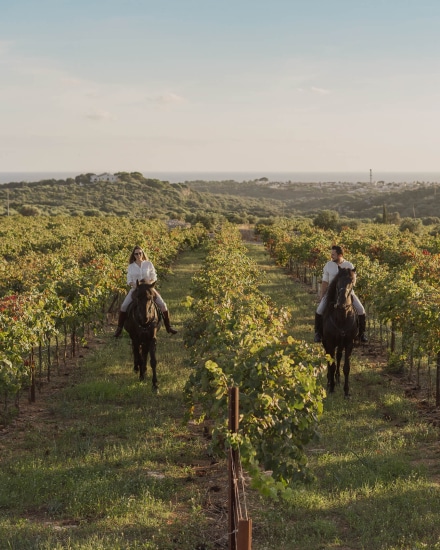
Ciutadella is washed in pomada (a local gin and lemonade drink), the sound of purebred Menorcan horses’ hooves fills the streets and its people dress in celebration. The Sant Joan festivities have begun.
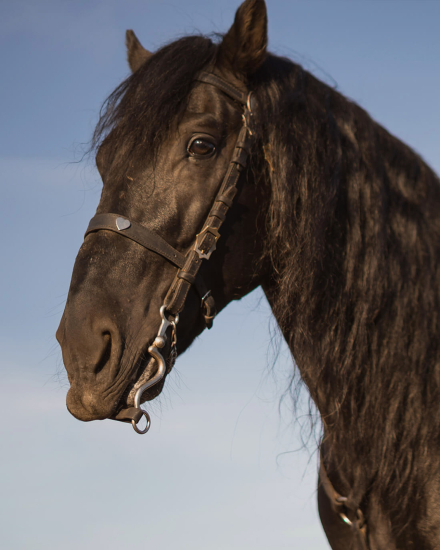
If there is one heritage that stands as an emblem of our Menorcan island, it is undoubtedly the festival of Sant Joan. Recognised for its majestic purebred Menorcan horses and its traditional pomada — an alcoholic drink made with Xoriguer gin and lemonade — this celebration marks the beginning of the summer solstice and culminates on 24 June, one of the shortest nights of the year, observed in very different ways across various pagan cultures.
This tradition began in the 15th century, in the heart of the Middle Ages. A group of devotees of Saint John created a procession with the aim of maintaining the hermitage of Sant Joan de Artutx, a sanctuary to which they would make a pilgrimage every 24 June on horseback, accompanied by a group of citizens from Ciutadella. This group was made up of the so-called cavallers (knights), a contingent of peasants, and the caixers, a delegation representing the highest social estates of the town, including the Church, the nobility, artisans and the British Crown.
The festivities have evolved over the years and today last a full week, although the most significant dates are the Sunday before Sant Joan, known as Dia des Be, 23 June, Saint John’s Eve, and 24 June itself.
More information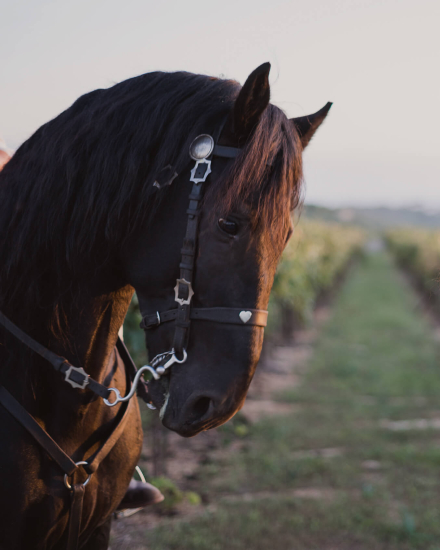
The Sunday prior to 24 June, known as Dia des Be.
The caixers officially present the flag to the Caixer Fadrí. Immediately afterwards, the fabioler beats his drum for the first time and plays his fabiol (a wooden flute), while a peasant walks through the streets of the city carrying a white lamb on his shoulders, announcing the beginning of the festivities.
That same afternoon marks the start of the first avellanada, a tradition in which suitors would throw hazelnuts at the young women they admired, thus declaring their intentions.
23 June is one of the most emblematic days of the festivities.
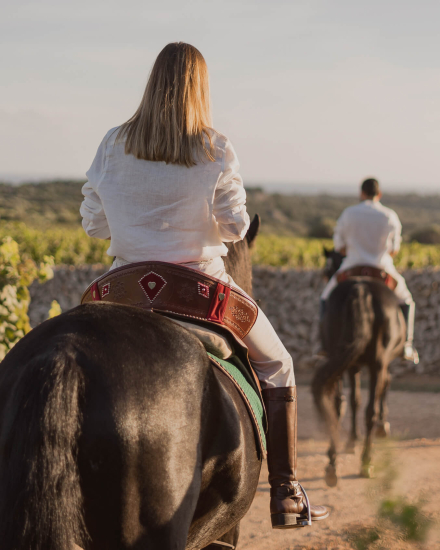
From 2 p.m. onwards, the fabioler gathers the qualcada (the group of horses and their riders) to make their entrance into Plaça des Born at 6 p.m., thus beginning the emblematic Cargol des Born. In this symbolic event, the horses and their riders complete three circuits of the square while the riders display their skill and the horses rise majestically on their hind legs amid the crowd. It is tradition for locals to dance to the music, and for the more daring to touch the horse’s chest as it passes.
24 June, Saint John’s Day.
The day begins at 8 a.m. with the music of the fabioler, while the qualcada gathers to practise its games and devotees attend the Cathedral to celebrate the traditional Misa de Caixers.
That same afternoon, the emblematic Jocs des Pla (Pla Games) begin, contests in which the riders demonstrate their skill on purebred Menorcan horses before an excited crowd that cheers them on. Among the most popular is Rompre Carotes (breaking the masks), in which two riders gallop side by side while one attempts to shatter a mask from his face with a stone — it is tradition to run and collect a fragment of the broken mask from the ground — and Ensortida, in which riders gallop at great speed holding a lance, which they must pass through a small ring suspended above the centre of the square.
Once these games have concluded, the festivities continue into the early hours of the morning with concerts held throughout the city of Ciutadella, while pomada flows through the streets, heralding the arrival of summer.